Baked Spinach Artichoke Dip with Three Cheeses
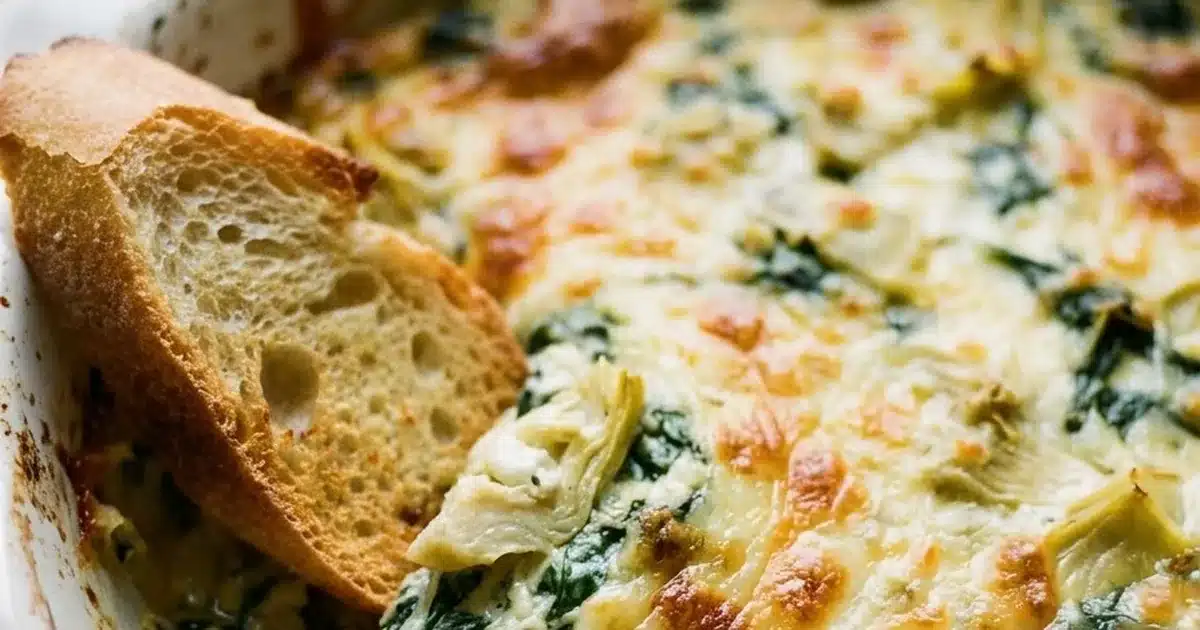
Baked spinach artichoke dip with cream cheese, Parmesan and mozzarella. Squeeze the spinach properly and it sets thick instead of running across the dish.
A good spinach artichoke dip holds its shape on a piece of toast. A bad one slides off, and the reason is almost always water. Frozen spinach carries an astonishing amount of it, and unless you wring that water out before anything else goes in the bowl, it leaks into the cheese in the oven and thins the whole thing down. This version fixes the problem at the start, then builds on it with three cheeses that each do a different job: cream cheese for body, Parmesan for savour, mozzarella for the browned, stretchy top. It is vegetarian, it takes about twenty minutes to put together, and it serves eight people with toast and crackers.
| Prep Time | 20 | Cook Time | 25 |
| Servings | 8 | Calories | 290 kcal |
Ingredients
- 280 g (10 oz) frozen chopped spinach, thawed and squeezed very dry
- 2 tins (400 g / 14 oz each) artichoke hearts in water, drained and roughly chopped
- 225 g (8 oz) full-fat cream cheese, at room temperature
- 120 g (1/2 cup) soured cream
- 60 g (1/4 cup) mayonnaise
- 100 g (1 cup) finely grated Parmesan, plus 2 tablespoons for the top
- 150 g (1 1/2 cups) grated low-moisture mozzarella
- 3 garlic cloves, finely grated
- 2 teaspoons lemon juice
- 1/2 teaspoon onion powder
- 1/4 teaspoon fine salt
- 1/4 teaspoon ground black pepper
- A pinch of grated nutmeg
- Butter, for the dish
Buy artichoke hearts packed in water rather than in oil or marinade. Marinated hearts carry herbs, vinegar and oil that pull the dip in a direction it was not built for, and the oil separates out in the oven. Tinned hearts in water are cheaper, blander and exactly right.
Use full-fat cream cheese from a block, not the whipped kind sold in tubs. Whipped cream cheese has air and extra water beaten into it, which is fine on a bagel and wrong here: it slackens the mixture before the spinach has had a chance to. The same logic applies to low-fat soured cream, which splits more readily under heat.
Essential Kitchen Tools
| Clean tea towel | Wringing the thawed spinach dry |
| Sieve | Draining and pressing the artichoke hearts |
| Large mixing bowl | Beating the cream cheese smooth first |
| Box grater | Grating your own mozzarella and Parmesan |
| 1.5 litre baking dish | A shallow layer that heats through evenly |
A potato ricer does the spinach job faster than a tea towel if you own one: load it with thawed spinach and squeeze over the sink. A nut-milk bag works too, and is easier on the hands than twisting cloth.
Why This Recipe Works
Every component here is chosen for how it behaves in a hot oven rather than how it tastes in the bowl. Cream cheese is the structure: it is stiff when cold, soft when hot, and it never breaks the way a cream-based sauce can. Soured cream and mayonnaise loosen it to a scoopable consistency and bring the acidity and the egg-yolk richness that plain cream cheese lacks on its own.
The three cheeses are not interchangeable. Parmesan is dry and intensely savoury, so it seasons the mixture from the inside without adding moisture; a hundred grams of it does more for flavour than any amount of salt would. Mozzarella is the opposite, mild and elastic, and its job is almost entirely textural, giving the pull and the browning that make the dish look the way people expect. Cream cheese ties them together and stops the melted cheese from turning rubbery as it cools on the table.
Artichoke hearts matter for texture as much as taste. They are soft but fibrous, so they interrupt what would otherwise be a uniform spoonful of hot cheese. Chopped into pieces rather than slivers, they also absorb a little of the surrounding mixture and turn mildly sweet in the oven.
And the spinach carries the whole thing, provided it is dry. Dry spinach behaves like a solid ingredient: it holds its shape and distributes evenly. Wet spinach behaves like an ingredient and a sauce at once, releasing liquid that the cheese cannot absorb.
Pro Tips for Better Results
Weigh the spinach after squeezing. If 280 g of thawed spinach does not come down to roughly 150 g, there is water left in it. This is the fastest way to check your technique without guessing.
Grate your own cheese. Pre-grated mozzarella is dusted with potato starch or cellulose to stop it clumping in the bag. That coating does the same thing in the dish, making the melt grainy rather than smooth.
Bring the cream cheese properly to room temperature. An hour out of the fridge, not ten minutes. Cold cream cheese leaves small white lumps that never disappear, however hard you beat it afterwards.
Grate the garlic rather than chopping it. Raw garlic pieces stay sharp and crunchy through a 25-minute bake. Grated on a fine grater, the garlic dissolves into the mixture and seasons all of it.
Keep the layer shallow. Four centimetres deep at most. A tall dish browns on top long before the centre is hot, and reheating it afterwards dries the surface.
Season at the end of mixing, not the start. Parmesan is salty and the quantity varies by brand. Taste the mixture cold before it goes in the dish and adjust then.
Let it rest. Ten minutes out of the oven is the difference between a dip that clings to a cracker and one that runs off it.
Nutrition Facts (per serving)
| Calories | Protein | Carbs | Fat | Fiber |
|---|---|---|---|---|
| 290 kcal | 12g | 8g | 24g | 3g |
Figures are for one of eight servings of dip alone, without bread or crackers. Replacing the mayonnaise with an equal weight of Greek yoghurt brings it to around 255 kcal and adds a little tang.