Garlic Butter Chicken Thighs with Lemon
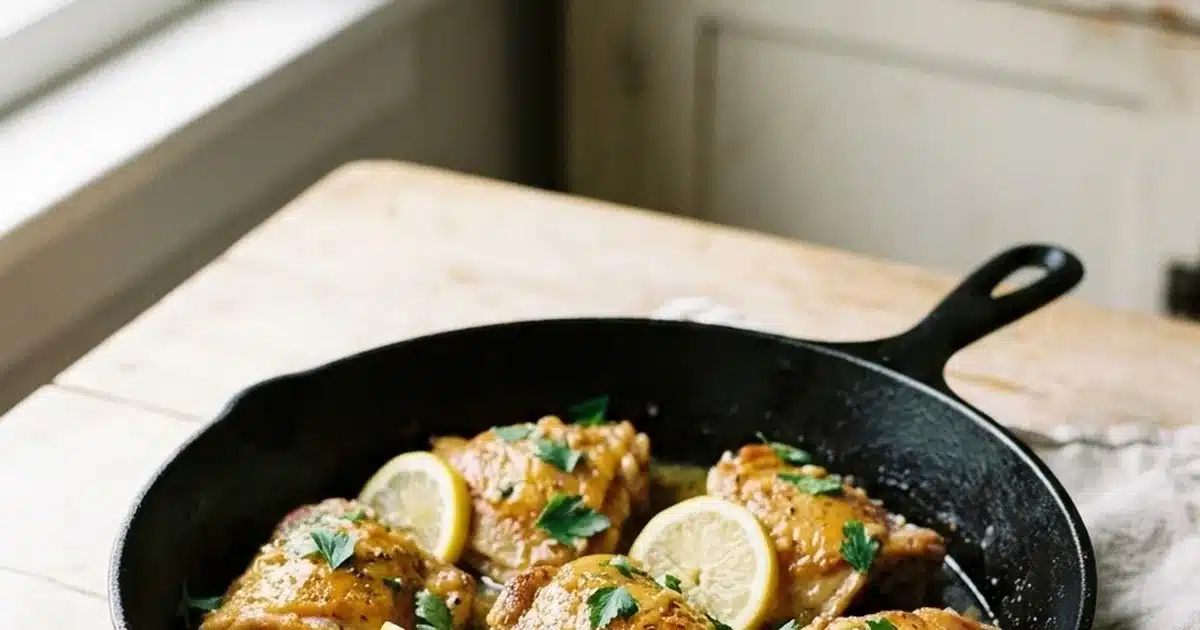
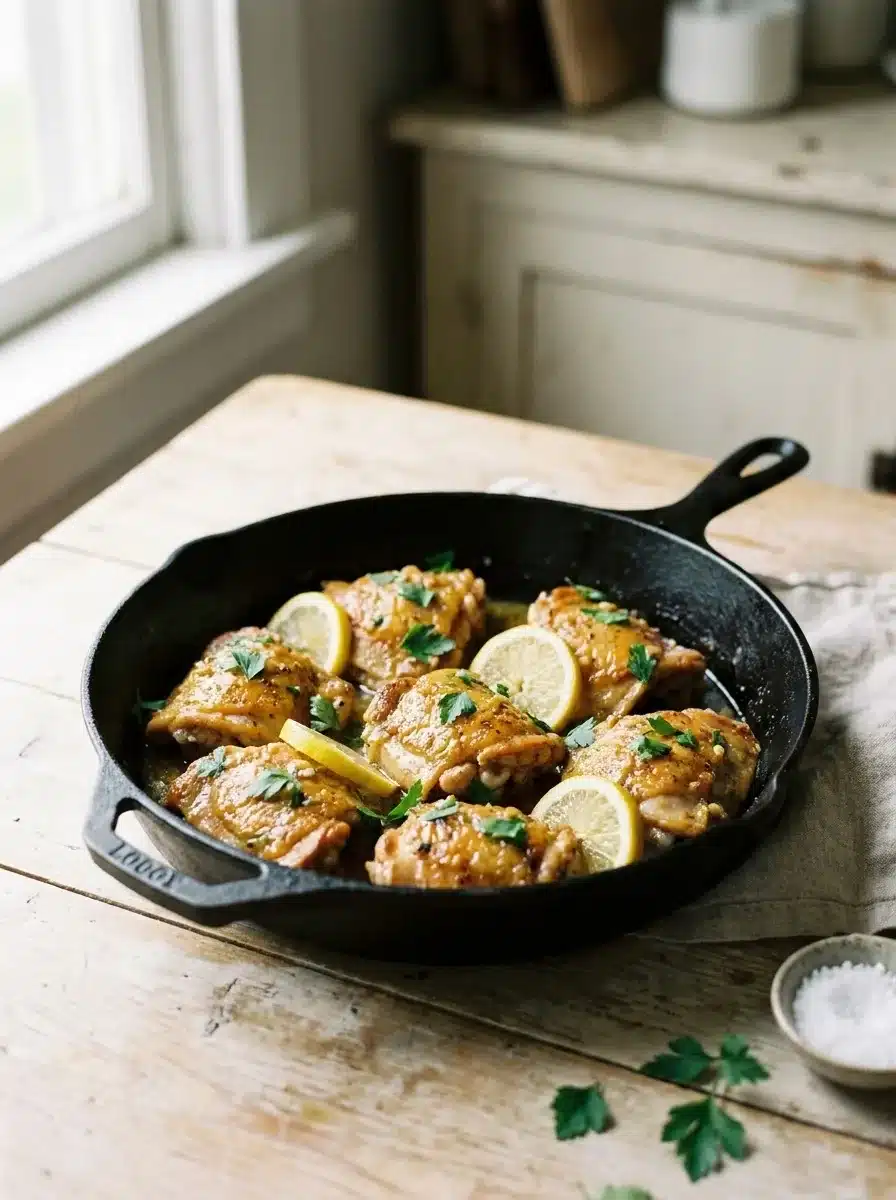
Bone-in chicken thighs started skin-down in a cold cast iron pan, then finished in a garlic, butter and lemon sauce. On the table in about 35 minutes.
Chicken thighs with crisp skin and a garlic butter sauce sound like two recipes fighting each other, and in most kitchens they are: the sauce softens the skin within a minute of hitting the plate. The fix is a matter of order. The thighs go into a cold cast iron pan skin-down, the fat renders out slowly over twelve minutes, and the garlic only joins once the searing is over and the heat has dropped. Lemon, stock and cold butter are then built into the fond left behind, and the chicken returns to the pan skin-up so the sauce never touches the crust. It takes one pan, about thirty-five minutes, and feeds four.
| Prep Time | 10 | Cook Time | 25 |
| Servings | 4 | Calories | 480 kcal |
Ingredients
- 8 bone-in, skin-on chicken thighs (about 1.2 kg / 2 lb 10 oz)
- 1.5 teaspoons fine sea salt
- 1 teaspoon freshly ground black pepper
- 1 teaspoon sweet paprika
- 60 g (4 tablespoons) unsalted butter, cold and cut into cubes
- 8 garlic cloves, peeled and thinly sliced
- 120 ml (1/2 cup) chicken stock, hot
- 2 tablespoons lemon juice, plus 1 teaspoon finely grated zest (1 unwaxed lemon)
- 1 teaspoon Dijon mustard
- 15 g (a loosely packed 1/2 cup) flat-leaf parsley, roughly chopped
- 2 sprigs fresh thyme (optional)
- 1 pinch dried chilli flakes (optional)
- 1 teaspoon olive oil, only if the thighs look very lean
- Flaky salt, to finish
Buy bone-in thighs with the skin on and look for pieces of roughly equal size, since a 180 g thigh and a 110 g thigh will not be ready at the same moment. The bone is not decoration: it slows the heat reaching the centre, which keeps the meat juicy over the longer, gentler cook that the skin demands.
Use a real lemon rather than bottled juice, because the zest does half the work here and bottled juice has none of it. The butter should go in cold and in cubes at the end; that is what makes the sauce thicken and shine rather than separate into a pool of yellow fat.
Essential Kitchen Tools
| Cast iron pan (26 to 30 cm) | Even, steady heat for the long render; goes straight into the oven |
| Kitchen paper | Drying the skin, which matters more than any other step |
| Tongs | Turning the thighs without tearing the crust |
| Instant-read thermometer | Checking 75 °C at the bone instead of guessing |
| Metal spoon or fat separator | Removing the rendered fat mid-cook |
| Wooden spoon | Scraping the fond loose when the stock goes in |
A heavy stainless steel frying pan substitutes for the cast iron without changing anything. A thin nonstick pan does not, as it neither holds heat nor builds the browned base the sauce is made from.
Why This Recipe Works
Chicken skin is mostly fat and water held in a thin sheet of collagen. To crisp it, both have to leave, and they leave at different speeds. Water goes first, at just above boiling point; the fat needs time at a moderate temperature to melt and run off. Starting in a cold pan gives the fat that time. By the point the pan reaches searing heat, the skin is already thin and dry and browns almost instantly in the fat it produced itself.
Drop the same thigh into a hot pan and the sequence is reversed. The surface proteins set in a few seconds and lock the fat in place, so you get a brown exterior with a soft, greasy layer directly under it. The colour looks right and the texture is wrong, which is the single most common failure in this dish.
Garlic is on the opposite schedule. Its sugars start to scorch at around 160 °C, well below the temperature the skin needs, and scorched garlic is bitter rather than simply dark. By adding it only after the chicken comes out, in butter, over low heat, for under a minute, you get the sweet, mellow version instead.
The sauce then works because of what is left behind. The browned residue on the base of the pan is concentrated chicken flavour, and stock plus lemon juice lift it straight back into the liquid. Dijon is there as an emulsifier more than a flavour: its mustard proteins hold the butter and the stock together so the finished sauce coats the back of a spoon instead of splitting.
Finishing skin-up is the last piece of logic. The meat comes up to temperature in the heat and steam of the sauce while the crust stays above the waterline, dry and intact right up to the plate.
Pro Tips for Better Results
Dry the skin twice. Once when the thighs come out of the packet, and again after the 10 minute salting rest. Each pass removes water that would otherwise have to boil off in the pan.
Do not crowd the pan. Eight thighs rarely fit in one 28 cm pan. Two batches of four produce better skin than one crowded batch, because packed thighs trap steam between them.
Pour the fat off as it collects. A thigh sitting in a centimetre of its own fat is being deep-fried, and deep-fried skin browns before it has finished rendering.
Let the pan tell you when to turn. Properly crisped skin lets go by itself. Sticking means it is not ready.
Slice the garlic, do not crush it. Slices have less surface area and far more margin before they catch.
Keep the finishing butter cold. Cold cubes added off the heat emulsify; warm butter added over a flame separates.
Save the rendered fat. Strained into a jar it keeps for weeks in the fridge, and it roasts potatoes better than oil does.
Nutrition Facts (per serving)
| Calories | Protein | Carbs | Fat | Fiber |
|---|---|---|---|---|
| 480 kcal | 38g | 3g | 35g | 0.4g |
Based on two thighs per person with a quarter of the sauce, and no side dish. The figure assumes the rendered fat is poured away; leaving it in the pan adds roughly 90 kcal a serving. Removing the skin before eating brings the total down to about 330 kcal.