Breakfast Burritos with Egg, Cheese and Potato
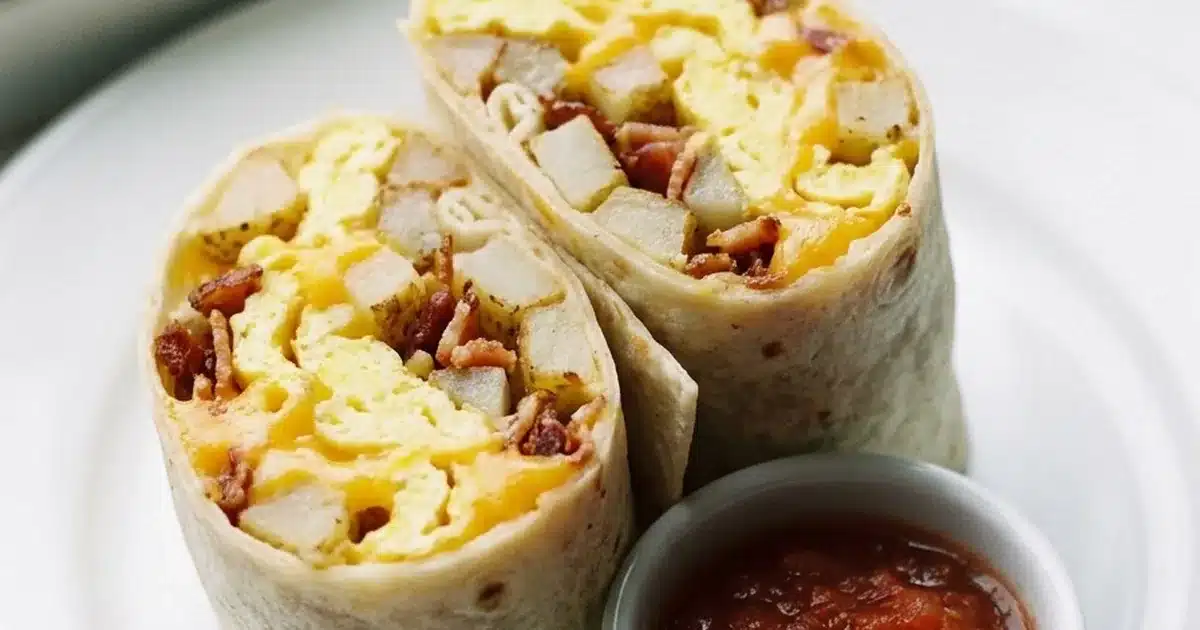
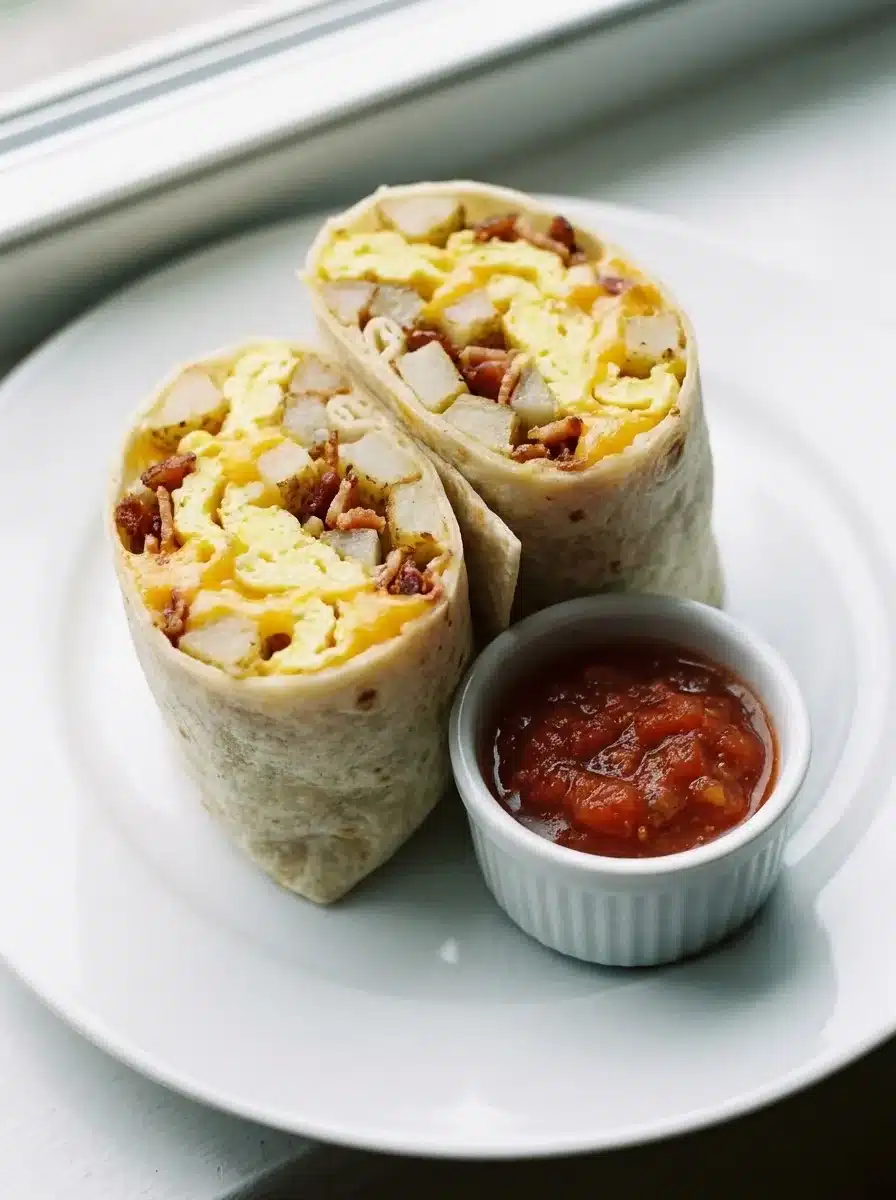
Breakfast burritos filled with soft scrambled egg, crisp potato, bacon and cheddar, folded tight and seared in a dry pan, built to be frozen in batches.
A breakfast burrito is a complete meal rolled into one hand: soft scrambled egg, crisp cubes of fried potato, bacon, melted cheddar and a spoonful of salsa, all held in a large flour tortilla. Made properly it holds together from the first bite to the last, with no split seam and no pool of liquid at the bottom. The method here is built around two details most recipes skip, the dry pan sear that seals the fold and the deliberate under-cooking of the eggs. Both exist for the same reason: these burritos are meant to be made six at a time and frozen, then reheated on a weekday morning in less time than it takes to boil a kettle. Cook them once, eat them for a fortnight.
| Prep Time | 20 | Cook Time | 30 |
| Servings | 6 | Calories | 640 kcal |
Ingredients
- 6 large flour tortillas, 25 cm (10 inch) burrito size
- 10 large eggs
- 60 ml (1/4 cup) whole milk
- 30 g (2 tablespoons) unsalted butter
- 500 g (1 lb) floury potatoes, peeled and cut into 1 cm (1/2 inch) cubes
- 30 ml (2 tablespoons) sunflower or other neutral oil
- 1 teaspoon smoked paprika
- 1/2 teaspoon garlic powder
- 250 g (9 oz) streaky bacon, or 6 breakfast sausages, skins removed
- 200 g (2 cups) mature cheddar, coarsely grated
- 120 ml (1/2 cup) thick tomato salsa, drained in a sieve
- 4 spring onions, finely sliced (optional)
- 1 teaspoon fine salt
- 1/2 teaspoon freshly ground black pepper
The tortilla is the one ingredient worth being fussy about. A 25 cm burrito-size flour tortilla is the only size that folds properly around this much filling, and the softer, thicker supermarket brands behave much better than thin ones, which tear at the corners the moment you tuck them. Buy them as fresh as you can and keep the packet sealed until the moment you build.
Everything else is flexible. Bacon can become sausage, chorizo or black beans; cheddar can become Monterey Jack, red Leicester or a mix; the salsa can be shop-bought as long as you drain it. What cannot change is the ratio: roughly equal volumes of egg and potato, with the bacon and cheese as seasoning rather than bulk. Get that balance wrong and the burrito becomes either a dry potato roll or a wet egg parcel.
Essential Kitchen Tools
| Wide frying pan (28 cm) | Frying the potatoes in a single layer |
| Non-stick pan (20 cm) | Soft scrambled eggs over a low heat |
| Silicone spatula | Folding the curds rather than breaking them |
| Large baking tray | Cooling the filling quickly before rolling |
| Greaseproof paper and foil | Wrapping each burrito for the freezer |
| Fine sieve | Draining the salsa |
None of this is specialist equipment, but the baking tray earns its place. Spreading the filling out thinly is the fastest way to get it to room temperature, and room temperature filling is the difference between a burrito that holds and one that goes limp.
Why This Recipe Works
A burrito is a structural problem before it is a flavour problem. The tortilla has to survive being filled, folded, cooled, frozen, thawed and reheated, and every bit of moisture inside it works against that. So the recipe is built around keeping water out: the potatoes are rinsed and dried before frying, the bacon is cooked until crisp, the salsa is drained, and the whole filling is cooled on a tray so that no steam is trapped at the moment of rolling.
The eggs are handled the other way around. Scrambled eggs lose water as they set, and a fully cooked curd will weep inside the wrapper within a day. Pulling them off the heat while they are still glossy leaves them just short of done, and the heat they meet later finishes them. It is a deliberate under-cook, and it is the single change that most improves a make-ahead burrito.
The final sear does two jobs at once. It dries the outside of the tortilla slightly, which firms it up, and it melts the cheddar sitting against the seam so that the roll is glued shut from the inside. A burrito that has been seared can be picked up and eaten standing at the kitchen counter; one that has not usually cannot.
Pro Tips for Better Results
Dry the potatoes properly. Damp cubes steam in the pan and never crisp, no matter how long you leave them. A tea towel and two minutes of patience are worth more than extra oil.
Scramble on a low heat. High heat forces water out of the eggs and leaves you with firm curds swimming in liquid. Low and slow, with the pan coming off the hob before the eggs look finished, gives a soft curd that holds its moisture.
Cool everything before you roll. This is the step people skip and the step that decides whether the burritos survive the freezer.
Put the cheese against the tortilla. A layer of cheddar touching the wrapper melts into a seal and also forms a light barrier between the bread and the wetter fillings.
Roll on a flat surface, not in your hands. Pressing the log down against the worktop as you roll removes air pockets, and a burrito with no air inside it keeps its shape.
Season in layers. Salt the potatoes, salt the eggs, and taste the bacon before adding more. Seasoning only at the end leaves the inside bland and the outside sharp.
Nutrition Facts (per serving)
| Calories | Protein | Carbs | Fat | Fiber |
|---|---|---|---|---|
| 640 kcal | 31g | 44g | 37g | 3g |
Figures are for one burrito out of six, made with streaky bacon and full-fat cheddar. Swapping the bacon for black beans and using half the cheese brings it to roughly 480 kcal with slightly more fibre. A wholemeal tortilla adds about 3 g of fibre per burrito.